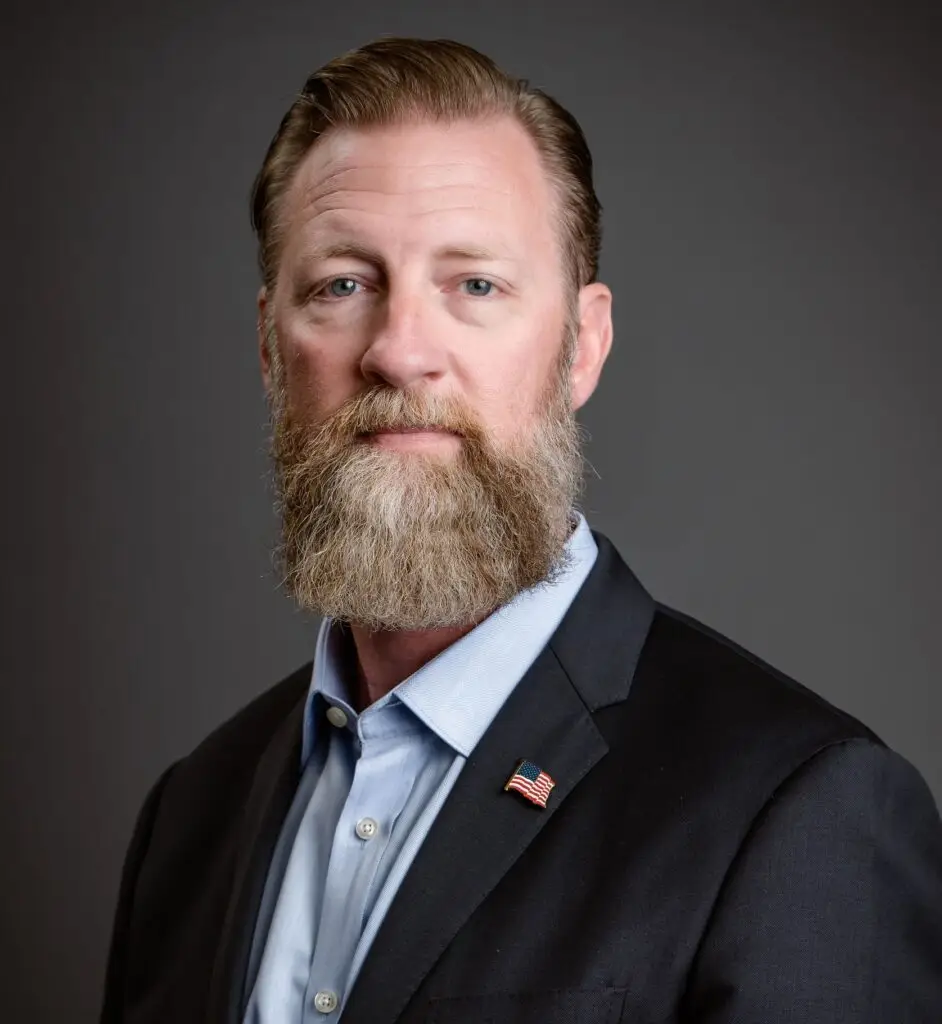

What the Navy Taught Me
About Running a Business
I spent 23 years in the United States Navy. I led people in high-pressure environments where the margin for error was razor-thin and the consequences of poor leadership were immediate and real. Nobody was going to call timeout. Nobody was going to let you reschedule the mission.
When I transitioned out and started working with small business owners, I expected to find a completely different world. Different language. Different stakes. Different playbook entirely.
What I found instead surprised me.
The leadership problems are almost identical.
Unclear mission. Misaligned teams. Leaders too deep in the weeds to see the big picture. People executing tasks without understanding the why behind them. Organizations running on momentum and habit rather than strategy and intention.
The uniform is different. The stakes look different on the surface. But the root causes — and the solutions — are remarkably similar.
Here are five lessons the Navy drilled into me that I now apply every day in helping service business owners stop grinding and start scaling.
Mission Clarity Beats Motivation Every Time
In the Navy, every operation started with a clear mission statement. Not a vague intention. Not an inspirational tagline. A precise, unambiguous statement of what we were trying to accomplish, why it mattered, and how we would know when we succeeded.
Most small businesses I walk into are running without that. The owner has a general sense of direction — grow revenue, hire better people, get less stressed — but that's not a mission. That's a wish list.
When your team doesn't know the mission with precision, they fill the vacuum with their own assumptions. They optimize for what makes sense to them. They work hard in the wrong direction. And the owner ends up doing everything themselves because it's faster than explaining it again.
"Clarity of mission beats motivation every time. Your team doesn't need a pep talk. They need to know exactly where you're going and why it matters."
The fix isn't a company retreat or a new values poster. It's sitting down and writing a clear, concrete answer to three questions: What are we building? Who are we building it for? What does winning look like in the next 90 days?
Once your team can answer those questions without looking it up, your business starts to move differently.
Accountability Is an Act of Respect
One of the biggest misconceptions I see among business owners — especially ones who care deeply about their people — is that holding someone accountable is the same as being harsh or uncaring.
In the Navy, we saw it the opposite way. Accountability was respect. It said: I believe you are capable of what I'm asking. I trust you with this responsibility. And I'm going to follow up, not because I doubt you, but because this matters.
When you avoid holding people accountable because you don't want conflict or you don't want to hurt feelings, you're actually communicating the opposite of respect. You're saying their performance doesn't matter enough to address. And over time, your best people — the ones with high standards — start to wonder why they're working so hard when no one notices the difference.
The business owners I work with who struggle most with accountability almost always frame it as a personality issue — "I'm just not a confrontational person." But accountability isn't confrontation. It's simply following up on what you've already agreed to. Set the expectation clearly. Check in consistently. Address gaps early, when they're still small.
Accountability systems don't have to be complicated. A weekly team huddle with clear deliverables. A simple dashboard that shows where things stand. A culture where it's safe to say "I'm behind" before it becomes a crisis. That's all it takes to start.
Command Presence Isn't About Volume — It's About Certainty
There's a leadership quality the Navy calls command presence. It's hard to define precisely, but every sailor knows it when they see it. It's the officer who walks into a chaotic situation and the room settles. Not because they're the loudest. Not because they're demanding attention. But because they project certainty.
Business owners lose this more than they realize — especially under pressure. When cash is tight, when a key employee quits, when a big deal falls through, the natural instinct is to panic visibly. To call emergency meetings. To oscillate between extremes. Your team is watching all of it, and they take their emotional cues from you.
Command presence in business means you can absorb a hit without transmitting the shock to your team. It means making a decision and committing to it, even when you're not 100% certain. It means speaking with confidence about the direction while staying genuinely open to new information.
"Your team needs to see you walk into the storm and not flinch. Not because the storm isn't real — but because you've prepared for it."
This doesn't mean being rigid or hiding reality from your people. It means being the calm, steady anchor they can orient around when things get uncertain. That steadiness is a skill. It can be developed. And it's one of the highest-leverage things a business owner can cultivate.
Standard Operating Procedures Aren't Bureaucracy — They're Freedom
I hear it from business owners regularly: "We're too small for all that process stuff." Or: "My people are experienced — they know what to do." Or my personal favorite: "We like to stay nimble."
I understand the instinct. But what most owners are describing isn't nimbleness — it's chaos with a positive spin.
In the Navy, SOPs — Standard Operating Procedures — weren't about slowing people down. They were about freeing people up. When the routine is documented and repeatable, your people don't have to use mental energy reinventing basic processes every day. They can focus that cognitive bandwidth on the actual problems that require judgment and creativity.
- How does a new lead get followed up with — every single time, not just when someone remembers?
- What does your onboarding process look like for a new client, written down and consistent?
- How does your team handle a service failure or customer complaint?
- What are the weekly activities that drive revenue — and who owns each one?
When these things live only in the owner's head, the business is entirely dependent on the owner showing up. That's not a business — that's a very demanding job that follows you everywhere you go. SOPs are what let you step back, take a vacation, or eventually scale without everything breaking.
After Action Reviews: The Discipline of Getting Better on Purpose
After every significant operation in the Navy, we conducted an After Action Review — an AAR. Not to assign blame. Not to celebrate wins and move on. But to ask, with complete honesty: What did we plan to do? What actually happened? Why was there a gap? And what do we do differently next time?
This is the discipline that separates organizations that accumulate experience from organizations that accumulate wisdom. Both have been in business for ten years. But one has ten years of learning. The other has one year repeated ten times.
Most small businesses run fast enough that there's never time to stop and review. The next job is already queued up. The next problem is already on the owner's desk. The review never happens, and so the same mistakes recur, the same inefficiencies persist, and the same opportunities keep getting missed.
A simple monthly review — even 60 minutes with your key people — asking those four questions honestly, will compound over time into a meaningful competitive advantage. The business that learns fastest wins. Not the one with the biggest budget, or the most years in operation, or the best location. The one that gets better on purpose.
The Bottom Line
I didn't start Leader's Edge Consulting because I thought the business world needed another consultant with a fancy framework. I started it because I saw business owners working themselves to exhaustion trying to solve leadership problems with more hustle — when what they actually needed was more structure, more clarity, and someone willing to give them straight talk instead of empty encouragement.
The Navy didn't make me a better leader by making things easier. It made me better by building the habits, systems, and mindset that hold up under real pressure. Those same habits work in roofing companies, HVAC firms, SaaS startups, and service businesses of every kind.
You don't have to have served to lead like this. You just have to be willing to do the work — on yourself and on your business — with the same discipline and intentionality that any high-performing team demands of its leader.
If any of this resonates, I'd like to talk. The first call is free, and I'll give you more value in 45 minutes than most consultants deliver in a month.
Ready to Lead Your Business Like You Mean It?
Book a free strategy call and let's talk about where you are, where you want to go, and what's getting in the way.